
Most people don't think about the air in their office until it starts to bother them — a stuffy meeting room, a lingering smell from the break room microwave, or that afternoon slump that hits everyone at once. What's easy to miss is that the air itself might be part of the problem. Offices trap dust, printer particles, cleaning chemicals, and recycled HVAC air all day long, and a lot of that stays put unless something is actively filtering it out. That's where an office air cleaner starts to matter more than most people realize.
This article looks at what's actually in office air, how it affects the people breathing it, and what separates a real office air filtration setup from one that just moves air around.
Why Office Air Quality Gets Overlooked
Homes get attention because people notice smells, dust, or allergy flare-ups in their own space. Offices are different. The air is shared, the building is managed by someone else, and problems build up slowly enough that nobody connects the dots. A renovation last spring, a water leak that got mopped up but not fully dried, or cleaning products used every night — all of these add pollutants to the air without anyone flagging it as an issue.
Research on indoor air backs this up. The World Health Organization has identified air pollution as one of the largest environmental health risks people face, and most people spend the vast majority of their day indoors. In an office, that means eight or more hours breathing whatever is circulating through the shared ventilation system.
What's Actually Floating Around in Office Air
Office air pollution isn't one thing — it's a mix:
Dust and fine particles from foot traffic, furniture, and paper
Volatile organic compounds (VOCs) from paint, adhesives, and new furniture off-gassing
Mold spores, especially in buildings with past water damage or poor humidity control
Cleaning chemical residue left behind after nightly janitorial service
Seasonal allergens like pollen that get pulled in through doors and air intakes
None of this shows up on a typical walkthrough. It shows up as headaches, congestion, irritated eyes, and that general tired feeling that gets blamed on "Mondays" instead of the air itself.
How Filtration Actually Works
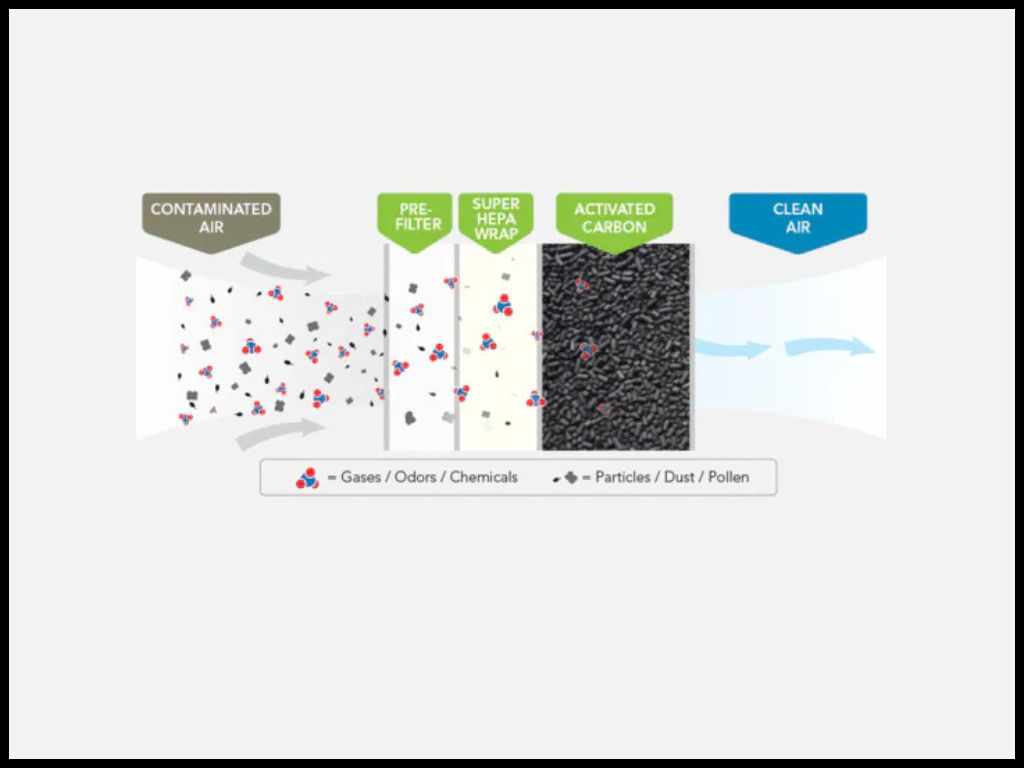
A real air filtration system for an office works in stages, and skipping a stage leaves gaps.
Stage one: a pre-filter. This catches larger particles — dust, hair, fibers — before they reach the finer filters, so those filters don't clog early.
Stage two: HEPA filtration. A true HEPA filter captures 99.97% of fine airborne particles, including dust and common allergens. This is the stage that handles the physical particles floating in the air.
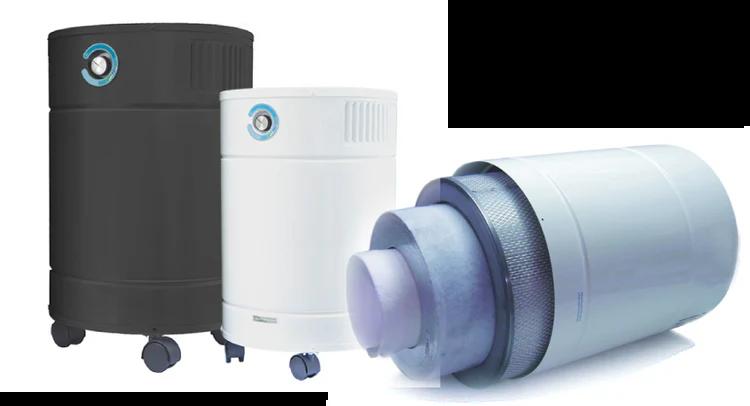
Stage three: activated carbon. Particles aren't the whole story. Chemical odors, VOCs, and gases pass right through a HEPA filter untouched. Activated carbon works differently — it adsorbs these compounds the way a sponge soaks up liquid. The amount of carbon in a filter, by depth and weight, determines how much it can hold before it stops working effectively.
A filtration system missing either the HEPA or the carbon stage is only doing half the job. That's a useful thing to check before assuming an office purifier is doing what it claims.
Office Filtration and Employee Allergies
The line between an office concern and a home air purifier for allergies conversation is thinner than people expect. Seasonal allergy triggers — pollen, mold spores, dust mites — don't stay confined to one building type. An employee managing allergies at home often deals with the same triggers at their desk, just from a different source. Office spaces with poor filtration can make allergy season feel like it never ends, since symptoms triggered at home get reinforced by exposure at work.
Sizing Matters More Than Most People Think
A purifier built for a small bedroom won't keep up in an open office layout. Filtration capacity is measured in CFM (cubic feet per minute), and it needs to match the square footage and ceiling height of the space, along with how many air changes per hour the room needs. A unit that's undersized will run constantly without ever fully clearing the air.
Frequently Asked Questions
Does office air quality really affect productivity?
Poor indoor air has been linked to fatigue, headaches, and difficulty concentrating. While results vary by workplace, it's a documented enough issue that many businesses now factor air quality into workplace health planning.
What's the difference between HVAC filtration and a standalone air purifier?
Standard HVAC filters are built to protect the system's equipment, not necessarily to clean the air to a high standard. A dedicated purifier with HEPA and carbon filtration targets particles and chemicals more directly.
Can one air purifier cover an entire office?
It depends on the layout. Open floor plans usually need either a higher-CFM unit or multiple units placed strategically, since air doesn't circulate evenly through partitions and cubicles.
How often do office air filters need to be replaced?
This depends on the filter type and how much pollution the space generates, but pre-filters typically need more frequent attention than HEPA or carbon filters, especially in high-traffic offices.
Conclusion
Office air quality is easy to ignore because the effects build up quietly — a little more fatigue, a few more headaches, allergy symptoms that never fully go away. Understanding what's actually in the air, and what a real filtration system needs to include, is the first step toward fixing it. Businesses researching office air cleaner options should look past marketing claims and check for the basics: a pre-filter, true HEPA filtration, and enough activated carbon to handle chemical odors and VOCs, sized correctly for the space.

Write a comment ...